
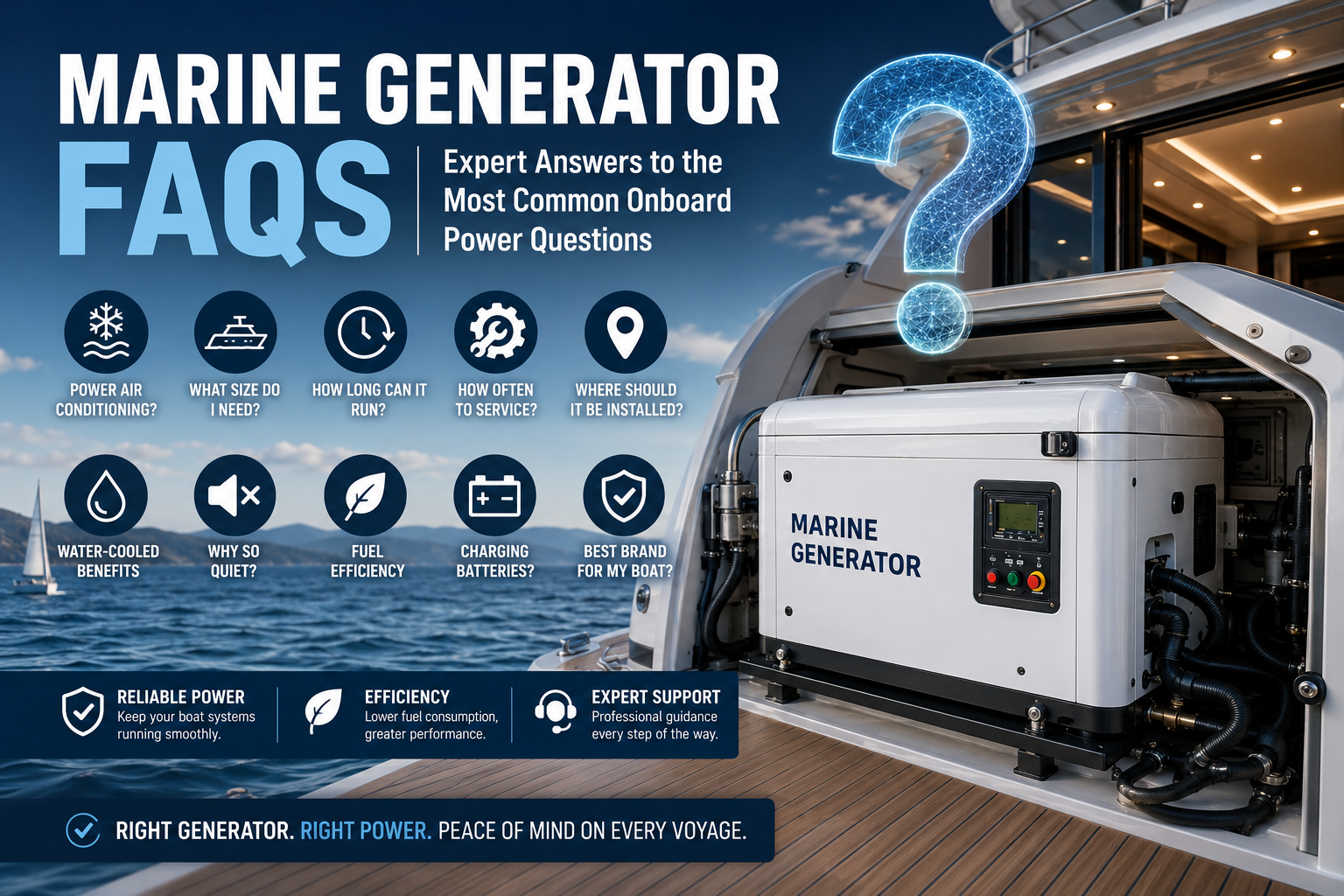
Choosing the right marine generators is one of the most important decisions you’ll make when equipping or upgrading your boat. Whether you own a sailing yacht, motor yacht, fishing vessel, or commercial workboat, a dependable generator provides the onboard electrical power needed to keep essential systems operating safely and efficiently.
At Generator Plus, we regularly receive questions from boat owners looking to better understand marine generators before investing. We receive Marine Generator FAQs for Topics such as generator sizing, installation, maintenance, fuel efficiency, and operating hours are among the most common concerns.
This FAQ guide brings together expert answers to some of the questions we hear most often. Whether you’re purchasing your first marine generator or replacing an existing unit, these answers will help you make a more informed decision and understand what to expect from your onboard power system.
Can a Marine Generator Power Air Conditioning on a Boat?
Yes. One of the primary reasons many boat owners install a marine generator is to operate air conditioning systems whenever shore power isn’t available.
Whether you’re cruising offshore, anchored overnight, or spending time away from a marina, a properly sized marine generators for sale supplies continuous electrical power to keep your air conditioning system running, ensuring a comfortable onboard environment even in hot climates.
However, the generator must be correctly matched to your boat’s electrical requirements. Air conditioning compressors require a significant amount of power during startup, often much more than they consume during normal operation. This startup surge must be considered when sizing your generator.
Before choosing a marine generator, calculate the total electrical demand of equipment you expect to operate simultaneously, including:
- Air conditioning units
- Refrigerators and freezers
- Battery chargers
- Water heaters
- Water makers
- Microwave ovens
- Navigation electronics
- Lighting systems
A professional load assessment helps ensure your generator operates efficiently without becoming overloaded.
Expert Tip: If your vessel has multiple air conditioning units, select a generator with additional reserve capacity to accommodate compressor startup while leaving sufficient power for other onboard equipment.

What Size Marine Generator Do I Need for My Boat?
The ideal generator size depends on your boat’s electrical demand rather than its overall length.
Two boats of the same size can have completely different power requirements depending on the number of onboard appliances and electrical systems installed.
Important factors to consider include:
- Number of air conditioning units
- Battery charging requirements
- Refrigeration systems
- Cooking appliances
- Water makers
- Navigation electronics
- Entertainment equipment
- Future electrical upgrades
The following table provides a useful starting point.
| Vessel Type | Typical Generator Range |
|---|---|
| Small sailing boats | 3–5 kW |
| Sailing catamarans | 5–9 kW |
| Express cruisers | 5–8 kW |
| Motor yachts | 9–20 kW |
| Large luxury yachts | 20 kW and above |
| Commercial vessels | Application specific |
These recommendations should always be verified through a proper electrical load calculation.
Oversizing a generator isn’t necessarily the best solution. Diesel generators perform most efficiently when operating within their intended load range. A generator that spends most of its time running under very light loads may experience reduced efficiency and increased maintenance requirements over time.
Generator Plus recommends selecting a generator based on your current electrical needs while allowing sufficient capacity for future additions.
How Long Can a Marine Diesel Generator Run?
Marine diesel generators are designed for continuous operation and can often run for many hours without interruption when properly maintained and operated under normal conditions.
The actual runtime depends on several factors, including:
- Available fuel supply
- Electrical load
- Cooling system performance
- Oil condition
- Maintenance schedule
Commercial vessels frequently operate generators for extended periods because many onboard systems require continuous electrical power throughout the working day.
For recreational boats, generators are commonly used while cruising, overnight at anchor, or whenever shore power is unavailable.
Long operating hours alone do not reduce generator life. Instead, reliability depends on:
- Routine maintenance
- Clean fuel
- Proper cooling
- Correct operating load
- Scheduled servicing
Many premium diesel marine generators are capable of providing 15,000 to 30,000 operating hours, while some commercial installations exceed these figures under favourable operating conditions.
Expert Tip: Running a diesel generator continuously under extremely light loads is generally not recommended. Operating within the manufacturer’s recommended load range helps improve fuel efficiency and supports long-term engine health.
How Often Should a Marine Generator Be Serviced?
Routine servicing is one of the most effective ways to maximise the reliability, efficiency, and lifespan of a marine generator.
Service intervals vary depending on the manufacturer and operating conditions, but most generators require maintenance based on both operating hours and elapsed time.
Typical maintenance includes:
- Changing engine oil
- Replacing oil filters
- Replacing fuel filters
- Inspecting raw water impellers
- Checking coolant levels
- Inspecting drive belts
- Cleaning or replacing air filters
- Inspecting electrical connections
In addition to scheduled maintenance, inspect your generator before extended trips or offshore passages.
Check for:
- Fuel leaks
- Coolant leaks
- Corrosion
- Loose hose clamps
- Excessive vibration
- Warning indicators
- Unusual exhaust smoke
Keeping detailed maintenance records makes it easier to monitor service intervals and may also support warranty claims where applicable.
Preventative maintenance is almost always more economical than repairing damage caused by neglected servicing.
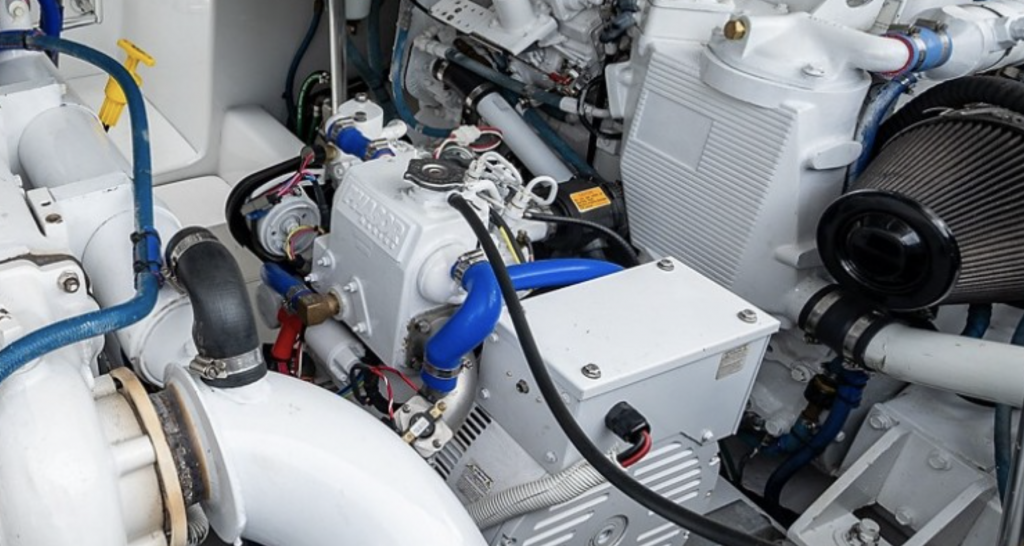
Where Should a Marine Generator Be Installed on a Boat?
The location of your marine generator has a direct impact on performance, reliability, maintenance accessibility, and onboard comfort.
Ideally, generators should be installed in a dedicated engine room or machinery space that provides:
- Adequate ventilation
- Proper cooling airflow
- Secure mounting
- Easy maintenance access
- Safe fuel connections
- Correct exhaust routing
- Protection from seawater exposure
The installation should also minimise vibration transmission while allowing technicians sufficient space to perform routine servicing, including oil changes, filter replacements, and general inspections.
Modern compact marine generators have made installation easier on vessels where machinery space is limited. However, even compact models require careful planning to ensure proper ventilation and maintenance access.
Poor installation can contribute to:
- Overheating
- Restricted servicing access
- Increased vibration
- Excessive onboard noise
- Reduced equipment lifespan
For these reasons, Generator Plus recommends that marine generators be installed by experienced marine professionals who understand electrical integration, cooling systems, exhaust design, and marine safety requirements.
Frequently Asked Questions
Can I run my marine generator overnight?
Yes, many marine generators are designed for extended operation. Provided the generator is properly maintained, adequately ventilated, and operating within its recommended load range, it can safely supply onboard power throughout the night. Always follow the manufacturer’s operating guidelines and monitor fuel levels.
Can one generator power my entire boat?
In many cases, yes. However, the generator must be correctly sized to handle your vessel’s total electrical demand, including the startup requirements of equipment such as air conditioning compressors. Larger yachts may require multiple generators depending on their power requirements.
Does a larger boat always require a larger generator?
Not necessarily. Generator size should be based on electrical load rather than vessel length. Two boats of the same size may have significantly different power requirements depending on the onboard equipment installed.
Key Takeaways
Choosing the right marine generator involves more than comparing brands or power ratings. Correct generator sizing, professional installation, routine maintenance, and understanding your vessel’s electrical requirements all play an important role in ensuring reliable onboard power for years to come.
What Is the Benefit of a Water-Cooled Marine Generator?
Water-cooled marine generators are the preferred choice for most modern yachts, commercial vessels, and offshore applications because they are specifically designed to operate in the demanding marine environment.
Unlike portable generators that rely on air cooling, marine generators use either raw seawater or a freshwater cooling system with a heat exchanger to regulate engine temperature. This allows the generator to operate more efficiently for extended periods while reducing engine wear.
Some of the key benefits include:
- Better temperature control during continuous operation
- Improved fuel efficiency
- Longer engine life
- Quieter operation
- Reduced risk of overheating
- Greater suitability for enclosed engine rooms
Many premium marine generator manufacturers, including Fischer Panda, Cummins Onan, Kohler, and Northern Lights, use advanced water-cooling systems to maximise reliability and performance.
For vessels that spend long periods cruising or operating commercially, a water-cooled marine generator is generally the most practical and dependable solution. Marine Engineering and Yacht Power Blog.
Is a Compact Marine Generator Powerful Enough for Larger Boats?
Yes—provided it’s correctly sized.
One of the biggest misconceptions among boat owners is that a physically larger generator always produces more usable power. Advances in engine design and alternator technology have enabled manufacturers to produce compact generators capable of supplying significant electrical output while occupying much less installation space.
Compact marine generators are particularly popular on:
- Sailing yachts
- Catamarans
- Express cruisers
- Luxury cruising boats
The key consideration isn’t the generator’s physical dimensions but its electrical output.
For example, a compact generator may comfortably power:
- Air conditioning
- Refrigeration
- Battery chargers
- Lighting
- Navigation systems
- Entertainment equipment
However, very large motor yachts or commercial vessels with substantial electrical demand may require higher-capacity generators or multiple generator installations.
Before choosing any generator, it’s important to complete an electrical load assessment rather than relying solely on generator size or engine displacement.
Are Fischer Panda Marine Generators Fuel Efficient?
Fischer Panda generators have earned a strong reputation for fuel efficiency, particularly among sailing yacht owners, catamaran operators, and long-distance cruisers where fuel economy is an important consideration.
Several design features contribute to their efficiency, including:
- Compact diesel engines
- Optimised alternator performance
- Efficient cooling systems
- Modern engine management technology
- Lightweight construction
Fuel consumption naturally varies depending on:
- Generator size
- Electrical load
- Engine speed
- Operating conditions
Like most diesel generators, Fischer Panda models achieve their best fuel efficiency when operating within their recommended load range.
Running any generator continuously under very light loads can reduce efficiency and increase maintenance requirements over time.
For boat owners planning extended cruising, improved fuel economy can reduce operating costs while extending cruising range between refuelling stops.
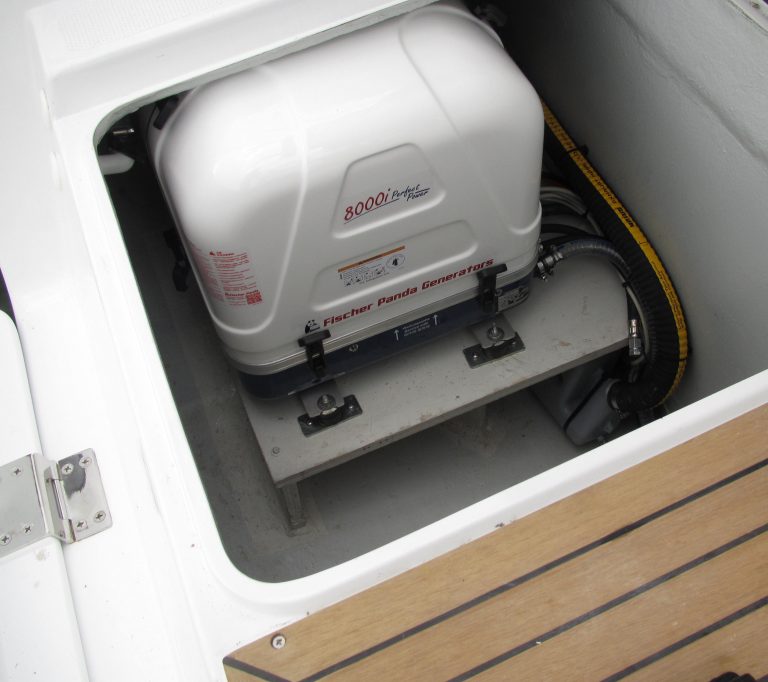
Why Are Fischer Panda Generators Considered Some of the Quietest on the Market?
Noise is one of the most important considerations for many yacht owners, particularly those who spend extended periods onboard.
Fischer Panda has developed a reputation for exceptionally quiet operation through a combination of engineering features designed to minimise vibration and airborne noise.
These include:
- Fully enclosed sound shields
- Compact engine design
- Freshwater cooling systems
- Advanced vibration isolation
- Precision engine mounting
- Carefully designed exhaust systems
While no generator is completely silent, installation quality also has a significant impact on onboard noise levels.
Proper mounting, exhaust routing, ventilation, and vibration isolation can substantially improve acoustic performance regardless of the manufacturer.
For sailing yachts and luxury cruising vessels where comfort is a priority, quiet operation often becomes one of the deciding factors when selecting a marine generator.
What Makes Fischer Panda Different From Other Marine Generator Manufacturers?
Fischer Panda has built its reputation by focusing on compact, lightweight, and exceptionally quiet marine generators designed specifically for space-constrained vessels.
Rather than simply adapting industrial engines for marine use, the company has concentrated on developing generator systems that integrate efficiently into modern yacht engine rooms.
Several characteristics distinguish Fischer Panda generators from many traditional marine generators.
Compact Installation
Many Fischer Panda generators occupy significantly less space than conventional generators of comparable output, making them particularly attractive for sailing yachts and catamarans where engine room space is limited.
Quiet Operation
Comprehensive sound insulation and vibration isolation help reduce onboard noise, making Fischer Panda one of the preferred choices for owners seeking greater onboard comfort.
Efficient Cooling
Many models use advanced freshwater cooling systems with heat exchangers, helping maintain stable operating temperatures during extended operation.
Modern Electrical Systems
Fischer Panda generators are designed to integrate with today’s increasingly sophisticated onboard electrical systems, including inverter chargers, lithium battery banks, and advanced power management systems.
Strong Reputation in the Cruising Community
Fischer Panda generators are widely used aboard cruising yachts, liveaboard vessels, and catamarans, where their compact footprint and quiet operation provide clear advantages.
Like every manufacturer, however, Fischer Panda may not be the ideal solution for every application.
For example:
- Commercial operators may prioritise heavy-duty durability and long operating hours.
- Offshore workboats may favour larger industrial diesel platforms.
- Luxury motor yachts may compare multiple premium brands before making a decision.
The most appropriate generator always depends on the vessel’s intended use, available installation space, electrical demand, maintenance preferences, and budget.
Frequently Asked Questions
Are compact generators less reliable than larger generators?
Not necessarily. Reliability depends on engineering quality, correct installation, proper maintenance, and operating conditions rather than physical size. Many compact marine generators provide excellent long-term reliability when correctly matched to the vessel.
Can a compact generator run multiple air conditioning units?
Yes, provided the generator has sufficient electrical capacity to handle both the running load and startup surge of the air conditioning compressors. Generator sizing should always be based on the vessel’s total electrical demand.
Are quieter generators less powerful?
No. Noise level and power output are separate characteristics. Modern sound-shielded generators can deliver substantial electrical output while maintaining low operating noise through improved insulation and vibration control.
Key Takeaways
Water-cooled generators, compact designs, and modern sound-insulated enclosures have transformed today’s marine power systems. Manufacturers such as Fischer Panda have demonstrated that a generator doesn’t need to be physically large to deliver dependable onboard power.
When comparing marine generators, focus on overall suitability rather than individual specifications. Consider your vessel’s electrical requirements, available installation space, expected operating hours, maintenance preferences, and long-term ownership costs before making a decision.
What Is the Difference Between a Marine Generator and a Portable Generator?
Although both produce electricity, marine generators and portable generators are designed for completely different environments.
A marine generator is purpose-built for permanent installation aboard a boat. It is engineered to operate safely in enclosed engine rooms while withstanding constant exposure to vibration, humidity, saltwater, and changing sea conditions. Portable generators, on the other hand, are primarily designed for temporary land-based use and are not intended to be installed or operated inside a vessel.
Some of the major differences include:
| Marine Generator | Portable Generator |
|---|---|
| Designed specifically for marine environments | Designed for temporary land use |
| Water-cooled on most models | Usually air-cooled |
| Permanently installed | Portable and movable |
| Integrated with the boat’s electrical system | Powers appliances through extension leads |
| Marine-certified components | Not marine certified |
| Suitable for enclosed engine rooms | Unsafe for enclosed marine spaces |
Portable generators may appear less expensive initially, but they should never be considered a replacement for a properly installed marine generator. Marine generators are specifically engineered to meet the safety, durability, and operational demands of life on the water.
Can a Marine Generator Charge Batteries While Powering Onboard Equipment?
Yes. Modern marine generators are designed to do much more than simply produce electricity for appliances.
When connected to the vessel’s electrical system through an appropriate battery charger or inverter/charger, the generator can simultaneously:
- Charge service batteries
- Power air conditioning
- Operate refrigeration systems
- Supply lighting
- Run navigation electronics
- Power galley appliances
- Support entertainment systems
This allows boat owners to recharge battery banks while continuing to use onboard electrical equipment without relying solely on shore power.
Many modern vessels now use sophisticated energy management systems incorporating:
- Lithium battery banks
- Inverter chargers
- Solar charging
- Shore power
- Marine generators
Together, these systems provide flexible and reliable onboard power whether the vessel is underway, anchored, or docked. Things to Know About Marine Generators.
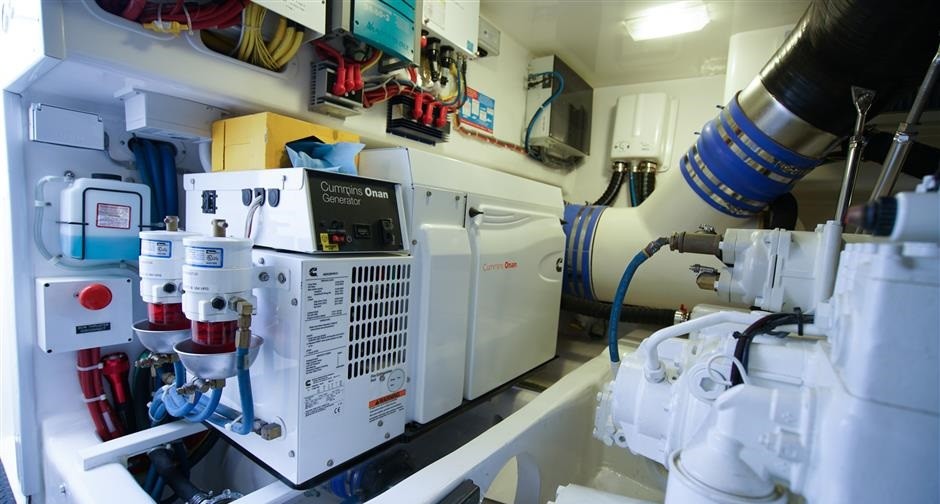
How Many Hours Should a Marine Generator Last?
The lifespan of a marine generator depends on several factors, including the quality of the equipment, installation standards, operating conditions, and routine maintenance.
High-quality diesel marine generators from established manufacturers can often deliver:
| Generator Type | Typical Service Life* |
| Recreational Use | 10,000–15,000+ hours |
| Premium Diesel Generators | 15,000–30,000+ hours |
| Commercial Installations | 30,000+ hours (application dependent) |
*Actual service life varies depending on maintenance practices, operating conditions, loading, and manufacturer recommendations.
Routine servicing has a greater impact on generator life than age alone.
Generators that receive:
- Regular oil changes
- Cooling system maintenance
- Fuel system servicing
- Proper electrical loading
- Clean fuel
- Scheduled inspections
often remain reliable for many years.
Conversely, neglected maintenance can significantly shorten generator lifespan regardless of manufacturer.
Should I Choose a Diesel or Gasoline Marine Generator?
The answer depends largely on your vessel and how you use it.
For most modern yachts and commercial vessels equipped with diesel propulsion engines, diesel generators are generally the preferred solution.
Diesel Marine Generators
Advantages include:
- Excellent fuel efficiency
- Long operating life
- High reliability
- Uses the vessel’s existing diesel supply
- Well suited to extended operating hours
Best suited for:
- Cruising yachts
- Sailing catamarans
- Commercial vessels
- Offshore applications
- Liveaboard boats
Gasoline Marine Generators
Advantages include:
- Suitable for gasoline-powered boats
- Lower initial investment on some models
- Simpler integration on gasoline vessels
Best suited for:
- Weekend recreational boats
- Smaller sport boats
- Gasoline-powered cruisers
For most buyers planning extended cruising or commercial operation, diesel generators generally provide better long-term value due to their durability and fuel economy.
What Is the Best Marine Generator Brand for My Vessel?
There isn’t a single brand that’s best for every application.
Instead, the ideal generator depends on your vessel’s electrical requirements, available installation space, expected operating hours, and maintenance priorities.
The table below provides a quick comparison.
| Brand | Best For |
| Cummins Onan Marine Generators | Luxury yachts, commercial vessels, offshore applications |
| Kohler Marine Generators | Cruising yachts, motorboats, recreational boating |
| Fischer Panda Marine Generators | Sailing yachts, catamarans, compact engine rooms |
| Nanni Marine Generators | Commercial operators, fishing vessels, heavy-duty applications |
| Westerbeke Marine Generators | Cruising boats, trawlers, traditional installations |
| MASE Marine Generators | Recreational boats and motor cruisers |
| Paguro Marine Generators | Small yachts and compact installations |
Rather than selecting a generator based solely on brand reputation, compare:
- Electrical output
- Fuel consumption
- Noise level
- Available installation space
- Ease of maintenance
- Warranty coverage
- Parts availability
- Long-term operating costs
At Generator Plus, we help customers compare leading marine generator brands to identify the most appropriate solution for their vessel rather than recommending a one-size-fits-all approach.
Marine Generator FAQs
Do marine generators require regular exercise?
Yes. Running a marine generator regularly under an appropriate electrical load helps circulate lubricating oil, reduce internal moisture, maintain seals, and minimise carbon buildup. Generators that remain unused for extended periods may develop more reliability issues than those operated routinely.
Is a quieter marine generator worth the extra investment?
For many yacht owners, absolutely. Reduced noise and vibration improve onboard comfort, particularly during overnight stays or extended cruising. Modern sound-enclosed generators from leading manufacturers provide excellent acoustic performance while maintaining dependable power output.
Can I upgrade my existing marine generator?
Yes. Many boat owners replace older generators with newer models that offer improved fuel efficiency, quieter operation, digital controls, and better integration with modern electrical systems. Before upgrading, it’s important to evaluate available installation space, electrical demand, cooling arrangements, and exhaust routing.
Should I buy a new or used marine generator?
A new marine generator offers manufacturer warranty coverage, the latest technology, improved efficiency, and known service history from day one. While a used generator may reduce the initial purchase cost, buyers should carefully assess operating hours, maintenance records, overall condition, and parts availability before making a decision.
Final Thoughts
A marine generator is far more than an onboard convenience—it’s an essential component of your vessel’s electrical system. Whether you’re cruising for the weekend, crossing oceans, operating a charter yacht, or running a commercial vessel, selecting the right generator helps ensure reliable power, greater comfort, and dependable performance wherever your journey takes you.
The best marine generator is the one that matches your vessel’s electrical demand, available installation space, operating profile, and long-term ownership expectations. By taking the time to compare leading brands, understand generator sizing, and plan for future power requirements, you’ll be better positioned to make a confident investment that delivers years of reliable service.
Why Choose Generator Plus?
Generator Plus is a Germany-based supplier of premium marine generators for recreational and commercial vessels worldwide. We supply trusted generator brands, genuine spare parts, and complete marine power solutions backed by professional guidance and responsive customer support.
Whether you’re replacing an existing generator, specifying equipment for a new build, or planning a complete onboard power upgrade, our team is ready to help you compare options and identify the right solution for your vessel.
Our services include:
- Marine generator sales
- Generator selection guidance
- Worldwide shipping
- Installation support
- Genuine spare parts
- After-sales assistance
If you have questions about marine generators or would like help selecting the right model, contact Generator Plus. We’ll be happy to discuss your project and recommend a solution tailored to your vessel and operating requirements.
