
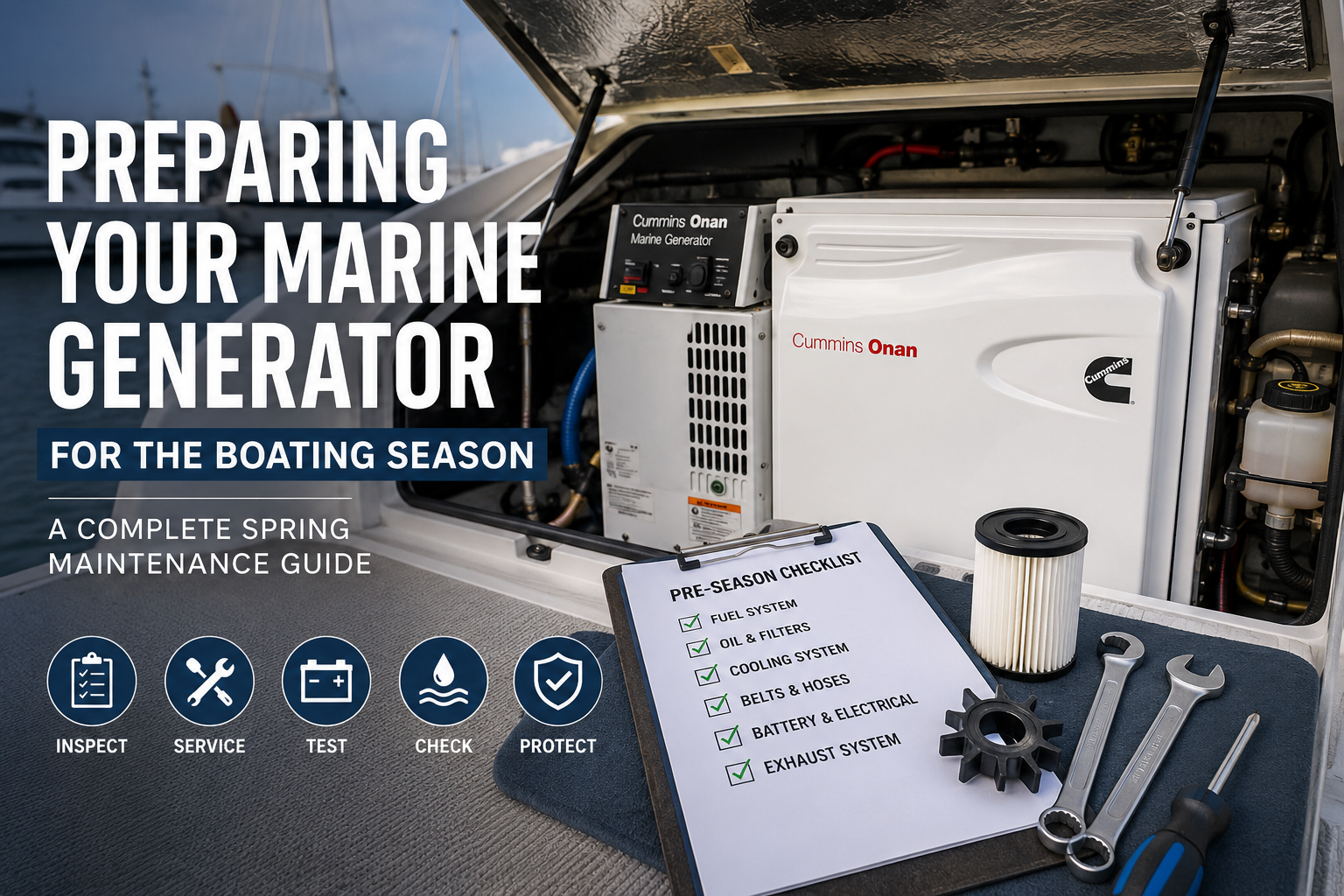
For many boat owners, the start of the boating season is one of the most anticipated times of the year. After months in winter storage, the covers come off, batteries are reconnected, and it’s finally time to get back on the water. But before casting off, there’s one system that deserves as much attention as your main engines—the marine generator.
At Generator Plus, we’ve found that many generator problems reported at the beginning of the season have one thing in common: they could have been prevented with a thorough pre-season inspection. A generator that was running perfectly when the boat was winterized isn’t guaranteed to perform the same way after months of inactivity. During storage, diesel fuel can deteriorate, batteries gradually lose charge, electrical terminals may corrode, rubber impellers can harden, and cooling components may become restricted.
The good news is that preparing your marine generator for the boating season doesn’t require major repairs in most cases. A systematic inspection, routine servicing, and replacing a few wear items can significantly improve reliability while reducing the risk of unexpected failures once you’re underway.
Whether your vessel is a sailing yacht, luxury motor yacht, commercial fishing boat, workboat, or catamaran, taking the time to prepare your onboard power system before launch will help protect your investment and provide dependable electrical power throughout the season.
In this guide, we’ll walk through the same key areas that experienced marine technicians typically inspect before returning a generator to service. You’ll learn how to identify common issues caused by winter storage, understand why each inspection matters, and discover practical maintenance tips that can help extend the life of your generator. Keep Your Boat’s Generator Running.
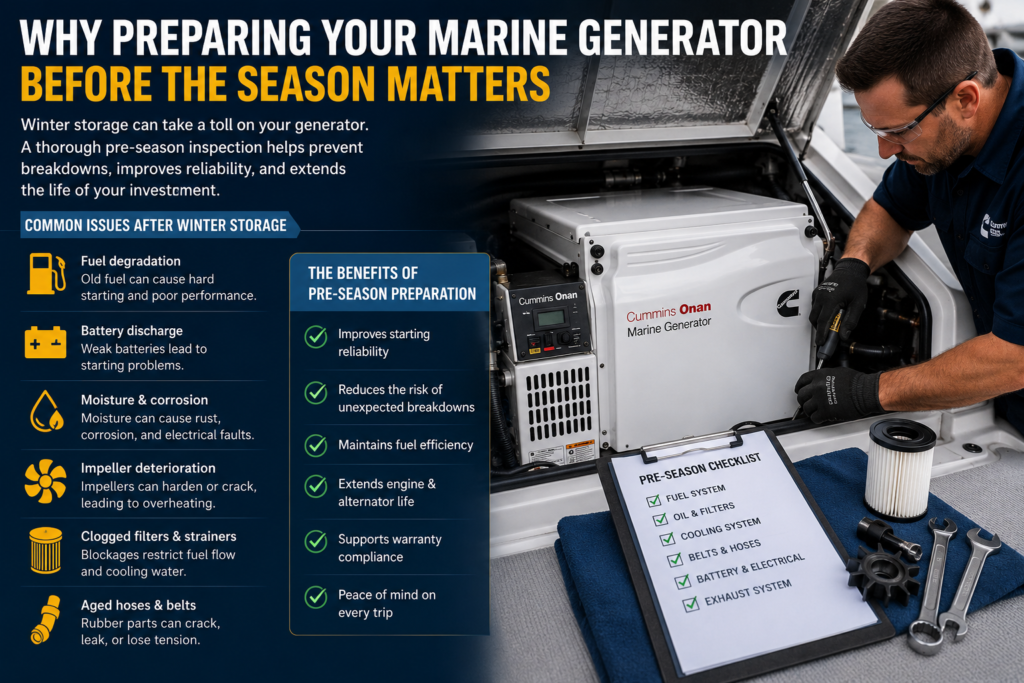
Why Preparing Your Marine Generator Before the Season Matters
Unlike many household generators that operate only occasionally, marine generators work in one of the harshest environments possible. They are constantly exposed to moisture, vibration, salt air, fluctuating temperatures, and prolonged operating hours. Even when your boat is laid up for the winter, these conditions continue to affect components throughout the generator.
Some of the most common problems discovered during spring commissioning include:
- Contaminated or degraded fuel
- Discharged batteries
- Corroded electrical terminals
- Raw water pump impellers that have become brittle or permanently deformed
- Blocked sea strainers
- Perished hoses and loose hose clamps
- Worn drive belts
- Moisture inside electrical connections
- Minor coolant or fuel leaks
Individually, many of these issues are relatively inexpensive to correct. Left unnoticed, however, they can quickly develop into overheating, starting problems, charging failures, or complete generator shutdowns.
Routine pre-season maintenance offers several important benefits:
- Improves starting reliability
- Reduces the risk of unexpected breakdowns
- Helps maintain fuel efficiency
- Extends engine and alternator life
- Protects warranty compliance where applicable
- Identifies worn components before they fail during the boating season
For commercial operators, preventing unplanned downtime is especially important, while recreational boat owners benefit from knowing their onboard power system is ready whenever shore power isn’t available.
Marine Generator Pre-Season Inspection Checklist
Before turning the ignition key, perform a complete visual inspection of the generator and its surrounding engine room. Experienced marine technicians rarely begin by starting the engine—they first look for signs of deterioration, leaks, corrosion, or damage that may have developed during storage.
The following checklist provides an excellent starting point. Taking Care of Your Marine Generator.
| Component | Inspection Items |
|---|---|
| Engine Oil | Check level, colour, contamination and service interval |
| Oil Filter | Replace if scheduled or due before the season |
| Fuel Filters | Inspect for contamination or water |
| Fuel Lines | Check for leaks, cracks and loose connections |
| Raw Water Pump | Inspect impeller and housing |
| Sea Strainer | Clean debris and inspect seals |
| Coolant | Verify correct level and condition |
| Heat Exchanger | Inspect for leaks and corrosion |
| Drive Belts | Check tension, glazing and cracking |
| Hoses | Inspect for swelling, brittleness or deterioration |
| Battery | Test voltage and inspect terminals |
| Electrical Connections | Clean corrosion and tighten connections |
| Exhaust System | Inspect hoses, clamps and water injection point |
| Engine Mounts | Check for excessive movement or deterioration |
| Sound Shield | Ensure insulation and fasteners remain secure |
Completing this inspection before launching your vessel provides an opportunity to replace inexpensive service items before they become costly repairs.
Generator Plus Recommendation
Create a written maintenance checklist for your generator and record the date each service item is completed. Consistent maintenance records make future servicing easier, support warranty claims where applicable, and can increase resale value when selling your vessel. Best Marine Generators: How to Choose the Right Marine Generator Brand for Your Vessel
Step 1: Inspect the Fuel System
One of the first areas we recommend inspecting after winter storage is the fuel system.
Diesel fuel naturally changes over time. If moisture enters the tank through condensation, it can encourage microbial contamination—often referred to as diesel bug—which may block filters, restrict fuel flow, and affect engine performance.
Before starting the generator, inspect the entire fuel system carefully.
Check:
- Fuel tank condition
- Water separator
- Fuel filters
- Flexible fuel hoses
- Hose clamps
- Fuel shut-off valves
- Fuel return lines
- Visible fuel leaks
If your generator uses transparent fuel filter bowls or water separators, inspect them for signs of water contamination or sediment.
Where contamination is suspected, replacing the filters before startup is often far less expensive than repairing damage caused by restricted fuel flow or injector problems later.
If the fuel has remained in storage for an extended period, consult your engine manufacturer’s recommendations for fuel treatment or replacement before returning the generator to regular service. Cummins Onan Marine Generators.
Why Fuel System Inspection Matters
Many generator starting problems at the beginning of the boating season are eventually traced back to contaminated fuel rather than mechanical failure.
A clean fuel system allows the generator to:
- Start more easily
- Run more smoothly
- Produce stable electrical output
- Improve fuel economy
- Protect fuel injection components
Taking a few extra minutes to inspect the fuel system can prevent hours of troubleshooting later.
Step 2: Replace Engine Oil and Oil Filter
Fresh engine oil is one of the simplest and most cost-effective ways to protect a marine generator.
Even generators with relatively low operating hours can benefit from an oil change after winter storage. Combustion by-products, moisture, and acids remaining in the oil from the previous season may gradually reduce its protective properties while the engine sits unused.
Replacing both the engine oil and oil filter before the season begins helps:
- Protect bearings and internal engine components
- Improve lubrication during cold starts
- Remove accumulated contaminants
- Maintain efficient engine performance
- Support longer engine life
Always use the oil grade and filter specified by the generator manufacturer. Marine diesel engines operate under demanding conditions, and using incorrect lubricants can reduce protection while potentially affecting warranty coverage.
Experienced Technician’s Advice
Don’t rely solely on engine hours when deciding whether to change the oil. If the generator was winterized several months ago, fresh oil before launch is inexpensive insurance compared with the cost of repairing internal engine wear. Check out our inventory for Fischer Panda Marine Generators
Step 3: Inspect the Cooling System
The cooling system deserves special attention because overheating remains one of the most common causes of marine generator failures.
Unlike automotive engines, marine generators rely on raw water, freshwater cooling circuits, or heat exchangers to maintain safe operating temperatures while running under continuous electrical loads.
One of the first components our technicians recommend inspecting is the raw water pump impeller.
Although the impeller may have appeared perfectly serviceable when the boat was winterized, the rubber vanes often remain compressed against the pump housing throughout storage. Over time, they can lose flexibility, crack, or permanently deform.
We’ve seen generators overheat within minutes of launch simply because an impeller that looked acceptable failed shortly after the engine reached operating temperature.
For this reason, many experienced boat owners choose to replace the impeller at the beginning of every boating season as preventative maintenance.
During your cooling system inspection, examine:
- Raw water impeller
- Sea strainer
- Heat exchanger
- Coolant level
- Raw water hoses
- Hose clamps
- Cooling water discharge
- Seacock and through-hull intake
Once the generator is started, confirm that cooling water is flowing freely from the exhaust outlet.
A weak or interrupted discharge may indicate:
- Blocked sea strainer
- Damaged impeller
- Restricted cooling passages
- Air leak in the raw water circuit
- Closed seacock
Any cooling system problem should be corrected before operating the generator under significant electrical load.
Generator Plus Recommendation
If you’re uncertain about the age of your impeller, replace it before the boating season begins. Compared with the cost of repairing an overheated generator or interrupting a planned voyage, replacing an impeller is one of the most economical preventative maintenance tasks you can perform. Check out our inventory for (Rehlko) Kohler Marine Generators
Step 4: Inspect Drive Belts and Hoses
Once you’ve confirmed that the fuel and cooling systems are in good condition, the next step is to inspect the generator’s belts and hoses. These components may seem simple, but they play a vital role in the reliable operation of your marine generator.
During winter storage, rubber components naturally age. Temperature fluctuations, moisture, and long periods without movement can cause belts to harden, hoses to lose flexibility, and clamps to loosen. These issues often aren’t obvious until the generator is operating under load.
Begin by inspecting all visible drive belts.
Look for:
- Cracks along the ribs or sidewalls
- Frayed edges
- Glazing or polished surfaces
- Belt dust around pulleys
- Incorrect tension
A slipping belt can reduce alternator charging performance, impair cooling, or eventually fail without warning during operation.
Next, inspect every accessible hose connected to the generator.
Pay particular attention to:
- Raw water hoses
- Coolant hoses
- Fuel hoses
- Exhaust hoses
Look for:
- Surface cracks
- Swelling
- Soft spots
- Brittleness
- Abrasion against nearby components
- Loose or corroded hose clamps
Even a small coolant or raw water leak can become a significant problem once the generator reaches normal operating temperature.
Generator Plus Recommendation
If you discover multiple hoses showing signs of age, consider replacing them as a complete set rather than individually. This approach reduces the likelihood of another hose failing later in the season and minimises future downtime. View our Nanni Marine Generators inventory.
Step 5: Check the Battery and Electrical System
Many generator problems reported at the beginning of the boating season turn out to be electrical rather than mechanical.
Even if the batteries were disconnected during winter storage, they gradually lose charge over time. Corrosion can also develop on battery terminals and electrical connections, creating resistance that affects starting performance.
Before attempting to start the generator, inspect the complete electrical system.
Check:
- Battery voltage
- Battery terminals
- Earth connections
- Starter motor connections
- Alternator wiring
- Fuse holders
- Electrical connectors
- Ground straps
Battery terminals should be clean, dry, and securely tightened.
If corrosion is present, clean the terminals carefully before reconnecting the battery.
A battery that appears fully charged may still struggle to start the generator if internal deterioration has occurred during storage.
Where possible, perform a battery load test before the first startup.
Signs of Electrical Problems
Watch for:
- Slow cranking speed
- Clicking starter relay
- Dim control panel display
- Warning alarms
- Intermittent electrical faults
Addressing these issues before launch is considerably easier than troubleshooting them while underway. Northern Lights Marine Generator
Step 6: Inspect the Exhaust System
The exhaust system is often overlooked during spring commissioning, yet it plays an essential role in both generator performance and onboard safety.
Marine generator exhaust systems operate under demanding conditions involving heat, vibration, moisture, and saltwater.
Carefully inspect:
- Exhaust hoses
- Hose clamps
- Waterlock muffler
- Water injection elbow
- Anti-siphon valve (where fitted)
- Exhaust supports
Look for:
- Cracks
- Burn marks
- Delamination
- Salt deposits
- Water leaks
- Loose fittings
Salt deposits around hose connections often indicate minor leaks that should be corrected before the generator returns to service.
If the exhaust hose feels unusually soft or brittle, replacement should be considered before the boating season begins.
Why Exhaust Inspections Matter
A damaged exhaust system can lead to:
- Water leaks
- Reduced cooling efficiency
- Increased engine room temperatures
- Excessive noise
- Dangerous exhaust gas leaks
Routine inspection helps identify these problems before they become serious safety concerns. Phasor Marine Generators
Step 7: Perform the First Startup Before Launch
One of the biggest mistakes boat owners make is waiting until the day of launch to start the generator for the first time.
Instead, complete your inspection several weeks before your planned trip. This provides sufficient time to order replacement parts or schedule professional servicing if required.
Once you’re ready to start the generator:
- Open the raw water seacock.
- Verify adequate battery voltage.
- Check engine oil level.
- Confirm coolant level.
- Ensure fuel valves are open.
- Start the generator according to the manufacturer’s instructions.
Allow the generator to idle briefly before gradually applying electrical load.
During warm-up, monitor:
- Oil pressure
- Engine temperature
- Charging voltage
- Cooling water discharge
- Exhaust smoke
- Warning alarms
- Engine vibration
- Unusual noises
The cooling water discharge from the exhaust should become visible shortly after startup.
If cooling water fails to appear, shut the generator down immediately and investigate the cause before restarting.
Generator Plus Recommendation
Rather than simply confirming that the generator starts, allow it to operate under approximately 50–70% electrical load for 20 to 30 minutes. Running the generator under load helps identify cooling issues, charging faults, fuel delivery problems, and abnormal operating temperatures that may not appear while the engine is idling. Westerbeke Marine Generators
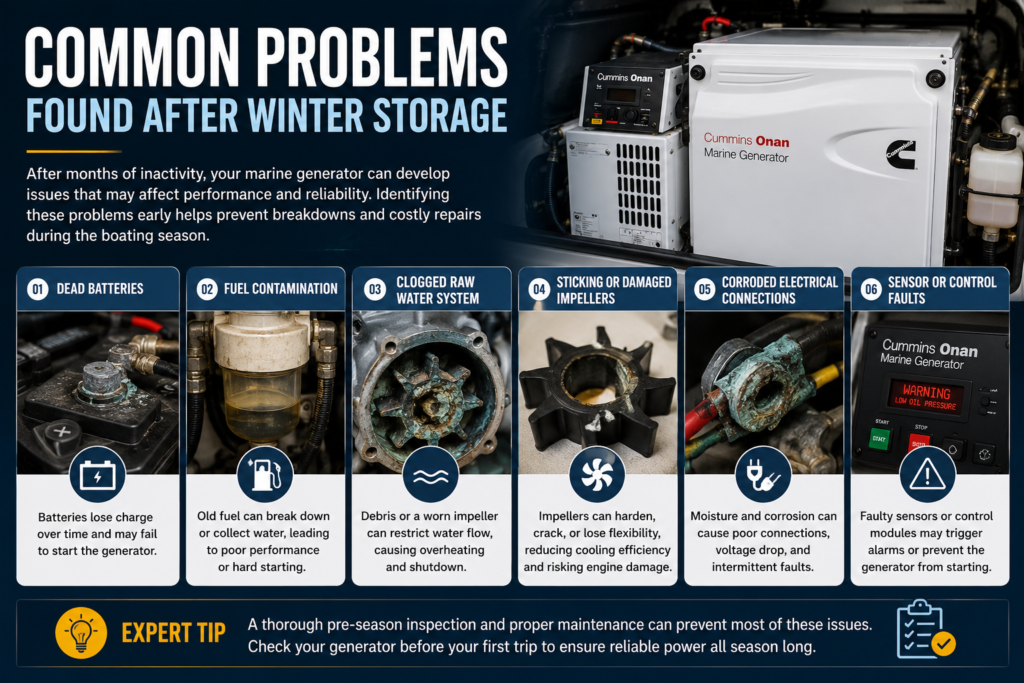
Common Problems Found After Winter Storage
Over the years, certain faults appear far more frequently than others when generators are returned to service after winter lay-up.
Some of the most common include:
| Common Problem | Likely Cause |
|---|---|
| Generator won’t start | Weak battery or contaminated fuel |
| Overheating | Damaged impeller or blocked cooling system |
| Poor charging | Loose alternator belt or battery fault |
| Rough running | Dirty fuel filters or water contamination |
| Low water discharge | Blocked sea strainer or worn impeller |
| Excessive vibration | Loose engine mounts or alignment issues |
| Warning alarms | Low oil level, overheating, or electrical faults |
Fortunately, most of these problems can be identified during a thorough pre-season inspection before they interrupt your first trip of the year.
When Should You Contact a Marine Generator Specialist?
Routine inspections are well within the capabilities of many experienced boat owners. However, some issues require specialist equipment and technical expertise.
We recommend arranging a professional inspection if you notice:
- Persistent warning alarms
- Cooling water problems
- Fuel leaks
- Electrical faults
- Excessive exhaust smoke
- Unusual knocking or vibration
- Difficulty maintaining voltage or frequency
- Repeated shutdowns under load
Modern marine generators incorporate sophisticated electrical controls, electronic monitoring systems, and engine management components. Accurate diagnosis often requires specialised marine diagnostic equipment and manufacturer-specific procedures.
At Generator Plus, we regularly assist boat owners, marine engineers, and commercial operators with generator selection, maintenance guidance, replacement parts, installation support, and technical advice. Identifying a small issue before it develops into a major repair is almost always the most economical approach.
Coming Up in Part 3
In the final part of this guide, we’ll answer the most common questions about pre-season generator maintenance, provide a recommended annual maintenance schedule, explain how to maximise generator lifespan, and share additional expert recommendations to help ensure reliable onboard power throughout the boating season.
Frequently Asked Questions About Preparing Your Marine Generator for the Boating Season
Even experienced boat owners often have questions when preparing their generator after winter storage. Below are some of the questions our team at Generator Plus receives most frequently.
How Often Should a Marine Generator Be Serviced?
The service interval depends on the generator manufacturer, operating hours, and the conditions in which the generator is used. Most manufacturers recommend servicing at specific operating-hour intervals in addition to an annual inspection before the boating season begins.
Routine servicing typically includes:
- Engine oil replacement
- Oil filter replacement
- Fuel filter replacement
- Raw water impeller inspection
- Coolant inspection
- Drive belt inspection
- Battery and charging system checks
- Exhaust system inspection
Following the manufacturer’s maintenance schedule not only helps maximise reliability but also supports warranty compliance where applicable.
Should I Replace the Raw Water Impeller Every Season?
In many cases, yes.
Although an impeller may appear undamaged after winter storage, the rubber vanes often remain compressed against the pump housing for several months. Over time, this can reduce flexibility and increase the likelihood of vane failure once the generator returns to service.
Because replacing an impeller is relatively inexpensive compared with repairing an overheated generator, many marine professionals treat it as routine annual preventative maintenance.
Can Old Diesel Fuel Damage My Marine Generator?
Yes.
Diesel fuel that has been stored for extended periods can absorb moisture and become contaminated with bacteria or microbial growth. Contaminated fuel can block filters, reduce engine performance, and increase wear on fuel injection components.
If your boat has been laid up for several months, inspect the fuel system carefully and replace contaminated filters before starting the generator.
Where fuel quality is uncertain, consult the generator manufacturer’s recommendations regarding fuel treatment or replacement.
How Long Should I Run My Generator Before the First Trip?
After completing your inspection, allow the generator to reach normal operating temperature before applying electrical load.
We generally recommend operating the generator under a moderate electrical load for approximately 20 to 30 minutes while monitoring:
- Oil pressure
- Engine temperature
- Charging voltage
- Cooling water discharge
- Exhaust smoke
- Generator frequency and voltage
- Warning indicators
Testing the generator while your boat is still safely alongside the dock allows you to identify potential problems before leaving the marina.
What Should I Inspect After Winter Storage?
A complete spring inspection should include:
- Engine oil
- Oil filter
- Fuel filters
- Fuel lines
- Cooling system
- Raw water impeller
- Heat exchanger
- Sea strainer
- Battery
- Electrical connections
- Belts
- Hoses
- Exhaust system
- Engine mounts
Completing a structured inspection each year greatly reduces the likelihood of unexpected generator failures during the boating season.
Is It Safe to Service My Own Marine Generator?
Many routine maintenance tasks—such as checking fluid levels, replacing filters, cleaning strainers, and inspecting hoses—can be carried out by experienced boat owners following the manufacturer’s service manual.
However, more advanced work involving:
- Electrical diagnostics
- Fuel injection systems
- Engine timing
- Alternator testing
- Electronic control systems
- Major cooling system repairs
should normally be performed by qualified marine technicians using the appropriate diagnostic equipment.
When in doubt, seeking professional assistance is often the safest and most cost-effective option.
Annual Marine Generator Maintenance Schedule
A consistent maintenance routine is one of the best ways to maximise reliability and extend generator life.
The table below provides a practical annual maintenance guide.
| Maintenance Item | Recommended Timing |
|---|---|
| Visual inspection | Before every boating season |
| Engine oil & oil filter | According to manufacturer service interval or annually |
| Fuel filters | Annually or as recommended |
| Raw water impeller | Inspect annually; replace if worn or uncertain |
| Sea strainer cleaning | Before launch and regularly during the season |
| Battery inspection | Before launch and periodically throughout the season |
| Cooling system inspection | Before launch |
| Drive belts | Inspect annually |
| Exhaust system | Inspect annually |
| Electrical connections | Inspect annually |
| Generator load test | Before the first voyage of the season |
Always refer to the maintenance schedule provided by your generator manufacturer, as service intervals may vary between models. Marine Generator FAQs – Expert Answers to the Most Common Onboard Power Questions
Pro Tips for a Trouble-Free Boating Season
Experienced boat owners understand that preventative maintenance is almost always less expensive than emergency repairs.
Here are a few practical habits that can help keep your marine generator operating reliably throughout the season:
- Start your generator several weeks before launch rather than on departure day.
- Run the generator under load regularly during the season to keep internal components lubricated.
- Replace inexpensive wear items before they fail unexpectedly.
- Keep spare filters, belts, and an impeller onboard during extended cruises.
- Record every service in a maintenance log.
- Investigate unusual sounds, warning alarms, or vibration immediately rather than continuing to operate the generator.
These simple practices can significantly improve generator reliability while reducing long-term maintenance costs.
Why Trust Generator Plus?
At Generator Plus, marine generators are our specialty. We work with private boat owners, shipyards, marine engineers, and commercial operators to supply premium onboard power solutions for vessels operating around the world.
Our support extends beyond supplying generators. We also assist customers with:
- Marine generator selection
- Generator replacement projects
- Installation guidance
- Preventative maintenance advice
- Genuine spare parts
- Technical support
- Worldwide shipping
Whether you’re preparing your existing generator for another boating season or considering an upgrade to a new onboard power system, our team is available to help you make informed decisions based on your vessel’s operational requirements. Read more Preparing Your Marine Generator for the Boating Season
Final Thoughts
Preparing your marine generator before the boating season is one of the most valuable maintenance tasks you can perform. A thorough inspection allows you to identify worn components, correct small issues before they become expensive repairs, and ensure your onboard power system is ready when you need it most.
From inspecting the fuel and cooling systems to testing the generator under load, every step contributes to improved reliability, better performance, and greater peace of mind on the water.
Investing a few hours in preventative maintenance before launch can help you avoid unexpected breakdowns, protect your generator from unnecessary wear, and enjoy a more reliable boating season.
If your generator requires servicing, replacement parts, installation support, or you’re considering upgrading to a new marine generator, Generator Plus is here to help. Our experienced team can recommend the right solution for your vessel, provide expert technical guidance, and support you with dependable marine power products backed by responsive customer service.

Comment (1)
[…] the highest-quality marine diesel generators can experience reliability issues if it isn’t installed […]